
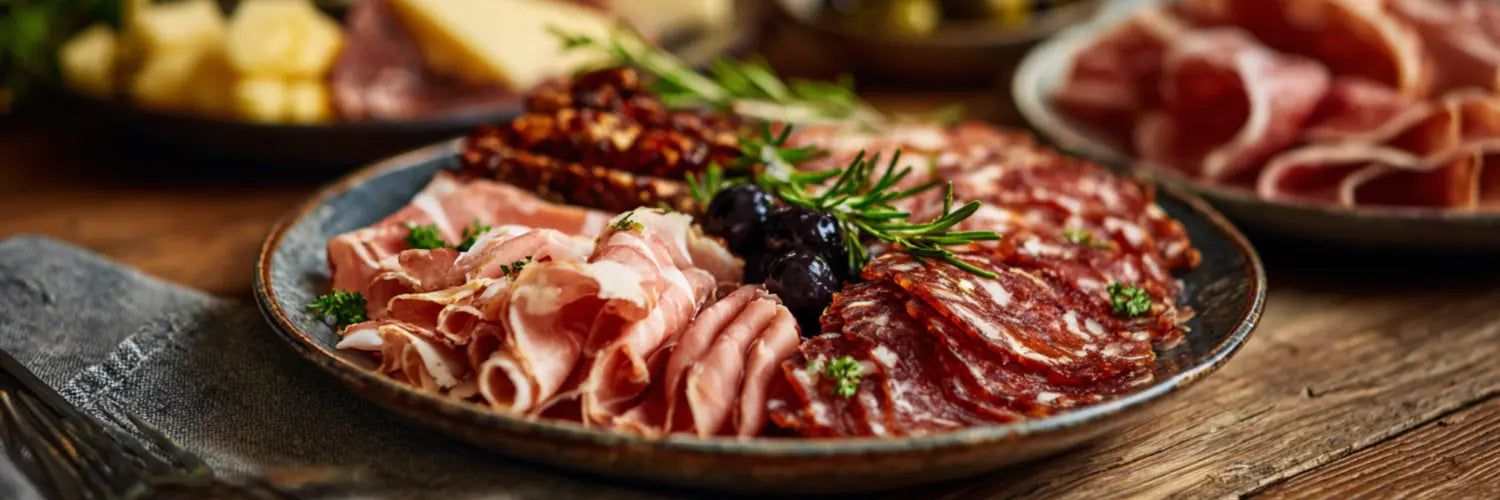



AI-generated illustration of golden rough-edged roast potatoes with a fluffy split centre

Side dish

Crisp Roast Potatoes in Lard

Published 25 October 2026 · Updated 25 October 2026

These roast potatoes have rough, golden edges and soft, floury centres, with a savoury coating of lard. Parboiling, letting the steam escape and giving each piece room in the hot tin help the outside crisp rather than steam.

Not kitchen tested by The Black Farmer.
Serves 4
Prep 20 min
Cook 85 min
Total 105 min

Timing: Allow about 105 minutes: a 20-minute preparation window with oven/tin preheating alongside; 10 minutes water heat-up; 10 minutes parboiling; a shared 5-minute window for draining, roughening and steam-drying while lard heats; 3 minutes loading and coating; 55 minutes roasting including turns; and 2 minutes to lift out, salt and serve. The two parallel windows count once each, not twice. Cook time is 85 minutes including drying and hot handling. These are planning allowances, not tested deadlines: stop parboiling at the stated texture, and extend any slower stage. Each additional roasting check adds 5 minutes. No marination, food cooling or rest is required. Side dishes, meat cooking and post-service equipment cooling are excluded.

Ingredients

Other Ingredients You'll Need

  • Potatoes — 1kg after peeling, cut into even 4–5cm chunks (Use floury Maris Piper or King Edward potatoes. Buy extra to allow for peeling and weigh the prepared potato; 1kg is the recipe quantity, not a shopping-pack claim. Avoid green, badly damaged or extensively sprouted potatoes.)
  • Rendered food-grade pork lard — 60g (Required: plain, already-rendered lard sold for cooking. Supply separately. Raw pork fat, suet and fatty trimmings are not ready-to-use lard; this recipe does not render them.)
  • Fine salt — 8g, divided: 6g for the parboiling water and 2g for finishing
  • Water — about 2 litres cold, enough to cover the potatoes by 2cm (For parboiling only; drain and discard. The exact volume depends on the saucepan.)

Method

Prepare the potatoes and heat the oven

Allow 20 minutes for preparation while the oven heats to 220°C conventional / 200°C fan. Put the empty, dry metal roasting tin on the middle shelf. Use a tin with a usable flat base at least 35 × 25cm and a rim at least 3cm high, not glass or ceramic. Peel sound floury potatoes, weigh out 1kg after peeling and cut into even 4–5cm chunks with broad, flat faces. Put them in a saucepan of at least 4 litres, add about 2 litres cold water to cover by 2cm, then add 6g of the fine salt. Measure the lard and keep the remaining 2g salt for finishing. Set out a colander, long-handled spoon, dry oven gloves and a stable heatproof trivet. The oven and dry tin have a 20-minute preheat allowance alongside this preparation; if either preparation or preheating takes longer, add the extra time.

Bring to the boil and parboil

Cover the saucepan and bring to the boil over high heat, allowing about 10 minutes for this heat-up. Remove the lid, reduce the heat to keep a steady, gentle boil and simmer uncovered for about 10 minutes. Check the pieces as they cook: their edges should look softened and slightly ragged, and a knife should enter the outside easily but still meet a little resistance towards the centre. Drain earlier if that point is reached; do not wait for the pieces to split or collapse. If the outsides remain hard, continue simmering and checking until softened, adding that extra time. The potatoes finish cooking in the oven.

Drain, roughen and dry while the lard heats

Once the potatoes reach the parboiling endpoint, use dry oven gloves to take the hot tin out, place it level on the trivet and add all 60g lard. Return it to the oven for about 5 minutes, until the lard is melted, fluid and hot, but not smoking. During the same 5-minute window, carefully drain the potatoes into the colander, discarding all the cooking water. Let the initial rush of steam escape, then give the colander a few gentle shakes to scuff the softened surfaces without breaking the chunks. Leave uncovered to steam-dry for the remainder of the window, until the surfaces look matt with no water dripping from them. This allowance includes draining and shaking, not an extra 5 minutes afterwards. If drying or fat heating takes longer, extend the window; remove the hot tin to the trivet if necessary rather than leaving the fat to smoke. Never add wet potatoes to hot fat. If the fat smokes, remove the tin carefully and let it stop smoking before proceeding; never add water.

Coat in the hot fat

Allow about 3 minutes to load and coat. With dry oven gloves, place the tin level on the trivet, keeping hands and face back. Lower the drained, dry-surfaced potatoes into the fat in small spoonfuls with a long-handled slotted spoon; do not drop the whole colander into the tin. Turn each piece gently to coat it, then sit it on a flat face. The first piece should sizzle; if it does not, return the tin to the oven until the fat is hot before adding the rest, and extend the timing. Spread the potatoes in one layer with roughly 1cm gaps, never piled up. This tin takes no more than the stated 1kg; if your tin cannot leave those gaps, use a larger suitable tin rather than crowding it. Return to the middle shelf.

Roast and turn

Roast at 220°C conventional / 200°C fan for about 55 minutes in total. Leave the potatoes undisturbed for the first 25 minutes, then remove the tin to the trivet with dry oven gloves and turn the pieces with the long-handled spoon. Roast for another 25 minutes, then turn any pale faces down for the final 5 minutes. Turning and checks are included in those intervals. The potatoes are ready when the ridges are golden with some deeper brown edges, the faces feel crisp under the spoon and a small knife slides easily through the centre of a large piece. Colour alone does not show whether the centre is tender. If needed, continue roasting in further 5-minute intervals and check again; each interval extends the total. Keep the potatoes uncovered and stop before the edges blacken.

Season and serve promptly

Allow about 2 minutes to lift the potatoes out with the slotted spoon, leaving excess fat in the tin, and scatter over the reserved 2g fine salt. Divide between four plates or transfer to a serving dish in a shallow layer. Serve straightaway without covering or adding a rest, which would trap steam against the crust. Leave the roasting tin somewhere safe to cool before handling the leftover fat; never pour hot fat into the sink.

Serving Suggestion

Serve beside Oven-Baked Lamb Steaks with Garlic Butter Kale. Keep gravy alongside rather than pouring it over every crisp edge. Prepare the lamb, greens and any gravy separately; their timing is not included here, and oven use needs planning around the potatoes' temperature.

Frequently Asked Questions

Is raw pork fat the same as lard?

No. Use plain food-grade lard that has already been rendered and is sold for cooking. Raw fat and trimmings need a separate rendering process and are not a direct substitution in this method. The 60g lard is required, not an optional garnish.

Why use floury potatoes rather than salad potatoes?

Maris Piper and King Edward potatoes soften at the edges during parboiling, allowing a rough surface to form while the centres become fluffy. Waxy salad potatoes hold a smoother, firmer texture and are not the intended potato for this method.

Do I need flour or semolina for the crust?

Not in this recipe. Gently roughen the softened potato surfaces, let them steam-dry and coat them in hot lard. Those potato edges provide the craggy surface; there is no flour or semolina coating in the ingredient list.

Why have the potatoes stayed pale or soft?

Check that the surfaces were dry, the fat was hot on loading and the pieces had gaps rather than touching in a heap. Keep the oven at the stated setting, turn pale faces towards the tin and use the method's extra roasting checks until the centres are tender and the edges crisp. Covering the finished potatoes traps steam and softens the crust.

Can I cook them beneath a roast joint?

Keep them in their own tin, away from dripping meat juices, which add moisture. They need the stated hot oven and space for air to circulate; a joint cooking at a lower setting needs separate scheduling. The potato timing does not include cooking or resting a meat joint or making gravy.