
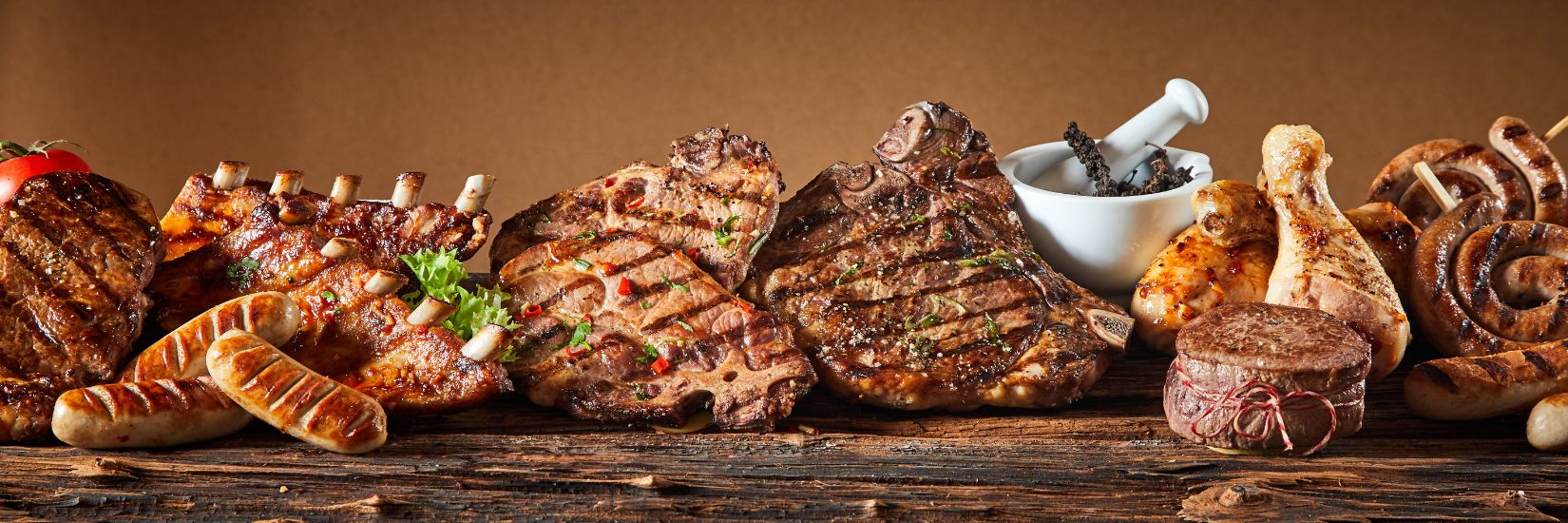


Slow-braised British beef short ribs, tender and rich, served straight from the oven

Slow-Braised British Beef Short Ribs

Published 16 February 2026 · Updated 12 October 2026

Beef short ribs become yielding and deeply savoury in a red-wine gravy with thyme, softened onions and root vegetables. Browning the ribs first builds flavour, while a gentle covered braise softens the meat and a final reduction gives the sauce a glossy finish.

Not kitchen tested by The Black Farmer.
Serves 4
Prep 20 min
Cook 240 min
Total 260 min

Ingredients

  • Beef - Short Ribs — 500g

    Beef short ribs

    1kg bone-in (2 x 500g packs)

    Keep in bone-in pieces; pat dry and trim only thick loose surface fat. Piece count and dimensions vary; check casserole fit before cooking.

    £16.00
  • Onion - Each

    Onion

    1 onion

    Peel and dice into roughly 1cm pieces; recipe uses one onion and the basket adds one each, not an assumed 500g pack.

    £2.00

Adds 3 items across 2 products — £34.00 total.

Pantry ingredients such as oil, salt and herbs are not included.

Other Ingredients You'll Need

  • Garlic — 3 cloves (Peel and crush.)
  • Carrots — 2 medium carrots (Peel and cut into roughly 1cm pieces.)
  • Celery — 2 celery sticks (Trim and cut into roughly 1cm pieces.)
  • Salt and black pepper — to taste (Season the ribs lightly before browning; adjust the finished sauce after reduction.)
  • Plain flour — 2 level tbsp (Use all in the vegetable base, not as a coating on the raw ribs; there is no leftover dredging flour.)
  • Rapeseed oil — 2 tbsp, divided: 1 tbsp for browning and 1 tbsp for the vegetable base (1 tbsp for browning; reserve 1 tbsp for the vegetable base after excess rendered fat is removed.)
  • Tomato purée — 2 tbsp (Cook with the garlic before adding flour.)
  • Red wine — 250ml (Use in the braising base; no alcohol-free claim is made.)
  • Beef stock — 500ml (Prefer low-salt stock; add to the braise. Have hot water ready for small top-ups only if needed to keep the liquid halfway up the ribs.)
  • Worcestershire sauce — 1 tbsp (Add with the stock.)
  • Fresh thyme — 2 sprigs (Add whole to the braise; remove woody stems before serving.)
  • Bay leaves — 2 leaves (Add whole to the braise; remove before serving.)

Method

Prepare the ribs and casserole

Allow about 20 minutes for preparation. Heat the oven to 160°C (140°C fan)/gas 3 while you chop the vegetables and measure the ingredients. Use a heavy, hob-safe lidded casserole of about 4 litres and roughly 24cm diameter, or a similar oval casserole that fits the ribs snugly in one layer with room to close the lid. Check the actual pieces before starting: do not stack a slab to make it fit, and ask the butcher to portion through the bones if necessary rather than trying to cut them at home. This method is for meaty bone-in braising ribs, not thin cross-cut strips; the packs do not specify a thickness or rib count. Pat the ribs dry, trim thick loose surface fat and season lightly with salt and black pepper. Do not flour the ribs; keep all the flour for the vegetable base. Keep raw-meat utensils separate from the clean plate and tongs used after cooking.

Brown in uncrowded batches

Allow about 20 minutes for heating the casserole, browning and transferring the ribs. Heat 1 tbsp of the oil over medium-high heat until shimmering, then brown the ribs in two uncrowded batches, turning to colour the meaty surfaces a deep brown. Leave space between pieces so they sear rather than steam; lower the heat if the pan residue starts to scorch. Transfer each batch to a plate. The time is a rounded allowance for both batches, not a promise for each face or a test of doneness.

Soften the vegetables and cook the flour

Lower the hob to medium. Spoon off excess rendered fat, leaving a thin film and the brown pan residue, then add the reserved 1 tbsp oil. Cook the onion, carrots and celery for about 10 minutes, stirring, until the onion softens and the vegetables pick up colour. Allow a further 5 minutes for the base: stir in the garlic and tomato purée and cook for about 3 minutes until the purée darkens slightly, then sprinkle in all 2 level tbsp flour and stir for about 2 minutes until no dry flour remains. If the pan residue is black rather than brown, remove the burnt residue before making the base.

Add the wine and set the liquid level

Allow about 5 minutes for this stage. Pour in the wine gradually, stirring to lift the brown residue and loosen the flour, and let it bubble while you stir in the 500ml stock, Worcestershire sauce, thyme and bay leaves. Return the ribs and any juices from the plate and bring the liquid to a gentle simmer. It should come roughly halfway up the ribs, not cover them: use a snug casserole and add a little hot water only if needed. Avoid a wide dish that needs a large volume of extra liquid. Cover tightly once the liquid is simmering; if heating takes longer, add that time to the estimate.

Braise gently until tender

Braise covered at 160°C (140°C fan)/gas 3 for about 3 hours. At the halfway point, turn the pieces carefully and check that liquid still reaches roughly halfway up them; add a small splash of hot water if needed and replace the lid promptly. These checks are included in the braising allowance, not extra stages. At the end, a fork or skewer should enter the thickest meat with little resistance and the meat should ease away from the bone. If still firm, continue covered in 15-minute increments, checking the liquid each time; rib thickness and bone-to-meat ratio vary. Tenderness is a texture check, not a substitute for a safety check. For a thorough-cooking check, use a clean thermometer in the thickest meat, away from bone, and check it reaches at least 75°C for 30 seconds; this check sits within the braise.

Skim and finish the gravy

Allow about 20 minutes for lifting out the ribs, removing the thyme stems and bay leaves, skimming visible surface fat and finishing the sauce. Keep the ribs loosely covered on a warm plate while you simmer the sauce uncovered over medium heat, stirring, until it lightly coats the back of a spoon. This covered hold overlaps the sauce stage; no separate rest is required. Stop reducing when the texture is right rather than boiling the gravy until salty; loosen with a splash of hot water if needed. Taste the sauce and adjust salt and black pepper after reduction. Return the ribs, spoon the sauce over them and heat through before serving. Reduction and warming are included in the 20-minute allowance; a wetter pan may need longer. Divide the meat into four modest portions and serve with mash and greens.

Serving Suggestion

Serve four modest portions with creamy mashed potatoes and buttered cabbage or steamed spring greens. The 1kg rib weight includes bone and fat, so it is not 1kg of edible meat; divide the cooked meat evenly rather than promising one rib per person. Accompaniments are additional to the recipe ingredients and basket.

Frequently Asked Questions

Why are my short ribs still tough?

Short ribs need gentle moist cooking as well as time. Keep the casserole tightly covered with liquid roughly halfway up the ribs and use the fork or skewer cue in the method. If the meat is still firm after the planned braise, continue in the 15-minute increments described there. Raising the heat or serving solely because a timer has finished will not reliably make thick ribs tender. The catalogue confirms a bone-in cut but not piece thickness, so tenderness cannot be guaranteed at a fixed time.

Which short ribs and casserole should I use?

Use the linked bone-in Beef - Short Ribs: two 500g packs supply 1kg including bones and fat. Check the pieces fit snugly in one layer in the lidded casserole described in the method, with the lid closing fully. Thin cross-cut strips are not interchangeable with meaty braising ribs for this timing. If the pack contains a slab that will not fit, ask the butcher to portion it; do not assume four packs or four ribs are needed for four people. The onion basket adds one onion each despite the product handle containing 500g.

How long should I allow for this recipe?

Allow about 20 minutes preparation and 4 hours cooking, or about 4 hours 20 minutes in total. Cooking comprises about 20 minutes browning, 10 minutes vegetables, 5 minutes garlic, purée and flour, 5 minutes adding liquids and reaching a simmer, 3 hours covered braising and 20 minutes finishing the sauce and warming the ribs. These are rounded planning allowances, not kitchen-tested precision. Oven heating overlaps preparation and the ribs wait covered while the sauce is finished. Add any extra time needed for tenderness, heating the liquids or reducing a wetter sauce. Make-ahead cooling, chilling and reheating are separate from this fresh-serving total.

Can I make the short ribs ahead and remove the fat?

Yes. Finish cooking, then divide the ribs and sauce into small, shallow portions to cool quickly rather than leaving the full casserole to cool. Refrigerate within 1–2 hours in a fridge at 0–5°C and eat within 48 hours of cooking, or freeze promptly once cooled if that is not possible. Once chilled, lift off the solidified surface fat. For serving, put the portions and sauce in a covered saucepan with a splash of water if needed; heat gently, turning the meat and stirring the sauce until steaming hot throughout. Allow about 30 minutes as a planning estimate for reheating, but check the centre of the meat rather than relying on that time. Reheat only once. If frozen, thaw fully in the fridge in a covered container and use within 24 hours of fully defrosting; thawing time depends on the portions. The cooling and reheating route needs additional elapsed time and is not included in the fresh-serving total.

Is 1kg of bone-in short ribs enough for four?

Serve four modest portions with creamy mashed potatoes and buttered cabbage or steamed spring greens. The 1kg rib weight includes bone and fat, so it is not 1kg of edible meat; divide the cooked meat evenly rather than promising one rib per person. Accompaniments are additional to the recipe ingredients and basket. If there are fewer than four rib pieces, take the tender meat off the bones and share it evenly. Bone size, fat and edible yield vary, so these are modest portions rather than four large rib dinners.