
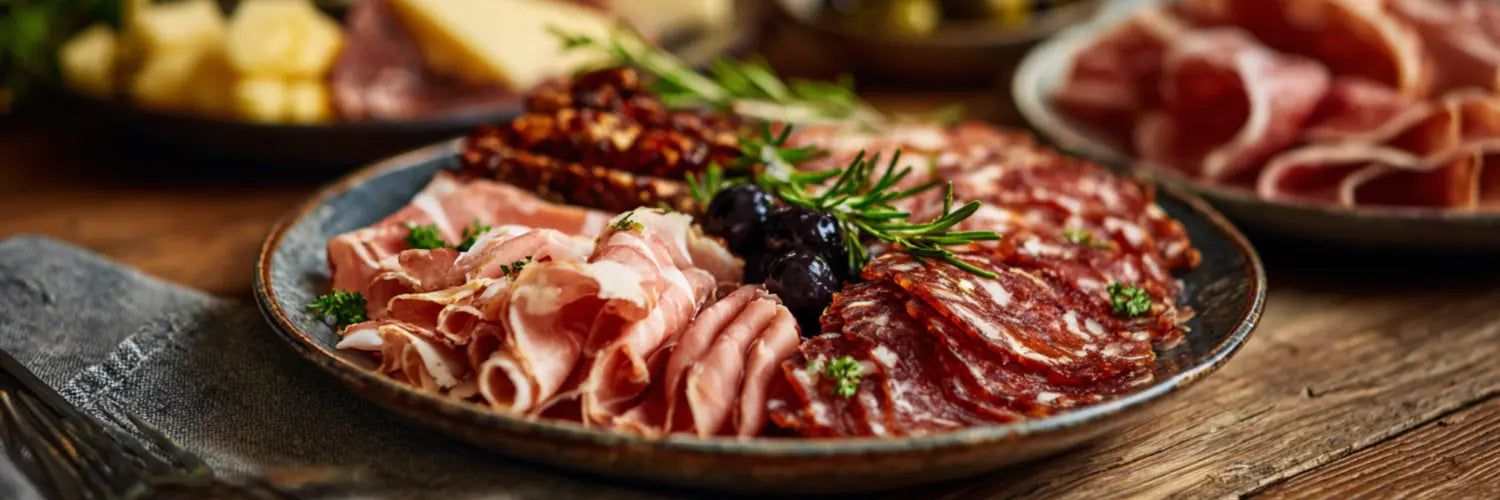



AI-generated illustration of glossy pale-yellow hollandaise sauce flowing from a spoon into a ceramic bowl

Sauce

Hollandaise Sauce

Published 30 October 2026 · Updated 30 October 2026

This warm hollandaise coats a spoon with buttery richness and a clean lemon tang. Whisking a gently warmed yolk base before adding whole melted butter off the heat gives you control over the emulsion, without a blender.

Not kitchen tested by The Black Farmer.
Serves 4
Prep 10 min
Cook 15 min
Total 25 min

Timing: Estimated 25 minutes: 8 minutes setup plus 2 minutes finishing/serving = 10 minutes preparation. Cooking elapsed time is 6 minutes bath heat-up overlapping 4 minutes butter melting and jug warming, then 2 minutes emptying/drying the jug, transferring butter and setting up its hot-tap-water bowl; next 4 minutes yolk thickening with passive butter temperature maintenance, then 5 minutes off-heat incorporation with the jug kept in that bowl between pours. These overlaps are explicit in the method; no jug preparation or warming is hidden. Cook time = 6 + 4 + 5 = 15 minutes. No planned cooling, marination or rest. All additional heat-up, replacement of cooled jug-bath water, butter warming, brief base rewarming before pouring or slower incorporation extends the conditional segments by actual elapsed time; zero is only the normal-path placeholder. No finished-sauce holding or reheating. Untested planning estimate, not measured performance; accompaniments are separate.

Ingredients

  • Longman's Unsalted Roll Butter (200g)

    Butter

    140g unsalted butter, cut into roughly 1cm pieces

    Use whole melted butter, including its milky liquid; do not skim or clarify. Contains milk. Recipe uses 140g, not the whole 200g shopping pack.

    £3.80

Adds 1 items across 1 products — £3.80 total.

Pantry ingredients such as oil, salt and herbs are not included.

Other Ingredients You'll Need

  • Hen egg yolks — 2 large hen egg yolks, from British Lion-marked or Laid in Britain-assured eggs (Verify assurance on eggs/pack. Free-range alone is not sufficient. Use clean, sound eggs within date; separate during preparation. Whites are not used in this sauce. No non-hen egg substitution or untested pasteurised-yolk conversion.)
  • Drinking water — 15ml cold water for the yolk base, plus up to 10ml cold water only if needed at finishing (Measure the base water and separate 10ml correction allowance. Add correction water in 5ml increments only if sauce is too thick; unused correction water is not required. Water for the pan bath is equipment water, not sauce volume.)
  • White wine vinegar — 5ml (1 tsp) white wine vinegar (All whisked into the yolk base. Check label for sulphites; no reduction or wine substitution.)
  • Lemon juice — 15ml freshly squeezed lemon juice, strained; divided: 10ml for the base and 5ml for finishing (Measure juice rather than assuming a fixed lemon yield. Both portions are used; no zest, wedges or extra juice required.)
  • Fine salt — Up to 1g fine salt, to taste; start with 0.5g (or a scant 1/8 tsp if fine scales are unavailable) (1g is the maximum seasoning allowance, not an amount that must all be added. Use 0.1g-resolution scales if weighing; an ordinary whole-gram scale is unsuitable. A scant 1/8 tsp is a restrained practical starting measure, not an exact gram equivalence. Taste after the initial addition and add more only if needed, within the allowance; unused salt is not required.)
  • Ground white pepper — A small pinch of ground white pepper (approximately 0.1g) (All added at finishing. Pale pepper keeps the sauce free of dark flecks; no garnish required.)

Method

Set up and separate the eggs

Allow about 8 minutes for setup, measuring, egg separation and clean-up. Have the separately prepared accompaniments ready to serve before starting the sauce. Check that a 20–22cm curved heatproof mixing bowl sits securely over a 16–18cm saucepan without its base touching the water; add roughly 3cm water to the pan, adjusting for that clearance. Keep both vessels off the heat for now. Measure all the ingredients, including the salt allowance using fine scales if available, keeping 10ml lemon juice with the base water and 5ml lemon juice for finishing. Keep the 10ml correction water separate. Cut the butter into roughly 1cm pieces. Use only large hen eggs with a British Lion mark or Laid in Britain assurance that you can verify. Separate two yolks into the bowl without letting shell fall in; the whites are not part of this sauce. Wash hands and clean surfaces and utensils after shell/raw-egg handling. Do not wash eggs. Whisk the yolks with 15ml cold drinking water, all 5ml vinegar and the 10ml base lemon juice until combined.

Heat the bath, melt the butter and warm the pouring jug

Allow about 6 minutes for these overlapping jobs. Bring the saucepan bath to a bare simmer over medium heat, then turn the hob low: occasional small bubbles and light steam, not a rolling boil. At the start of this stage fill the heatproof pouring jug with hot tap water and leave it to warm for about 4 minutes while all 140g butter melts in its separate pan over the lowest heat. Stir the butter and lift the pan off as soon as no solid pieces remain, allowing about 4 minutes; do not brown, boil, skim or discard the milky liquid. During the remaining 2 minutes, empty the jug completely and dry its inside and lip with a clean cloth. Stir and scrape every part of the whole melted butter into this warmed jug. Fill the second heatproof bowl with fresh hot tap water and stand the jug securely in it, with the water below the jug lip so none enters the butter. Keep this jug bath off the hob. This is brief temperature control during making, not a holding method for finished sauce. The butter should be fully fluid and the outside of the jug at butter level comfortably warm to a brief touch, not painfully hot; the butter must not steam or sizzle. If the jug feels cool, replace its surrounding water with fresh hot tap water and stir until warm before starting the yolks. Watch both pans during heat-up; if needed allow longer for the simmer and warm melted butter.

Whisk a warm, thickened yolk base

Set the mixing bowl over the barely simmering saucepan bath and whisk continuously for about 4 minutes, sweeping the curved base and sides. Keep the bowl clear of the water. The butter jug stays in its off-hob hot-water bowl during this stage; no second hob or extra whisking task is needed. The yolks should become paler and foamy, then form a light ribbon that briefly shows when the whisk is lifted. The bowl and base should still be warm, not merely thickened and left to cool. Do not aim for a stiff paste. If the mixture catches at the edges, lift the bowl clear and keep whisking off the bath, allowing longer if needed to reach the cue. Remove onto the folded dry tea towel when ready. Immediately check that the butter is still fully liquid and its jug comfortably warm, without steam. If it has cooled, leave the yolk bowl off the heat, replace the water around the jug with fresh hot tap water and stir the butter until warm. If the base has cooled during this adjustment, briefly return it to the barely simmering bath, whisking continuously just until warm and flowing again; lift off at once if it starts catching. Count this extra adjustment time rather than leaving a cold base for pouring. Turn off the saucepan hob and start the butter addition straight away. These are culinary heat controls, not pasteurisation.

Emulsify warm whole butter off the heat

Allow about 5 minutes off the heat to incorporate all the warm melted butter, whisking without stopping. Leave the jug standing in its off-hob hot-water bowl between pours so it does not cool in a cold jug. Stir the jug to redistribute its milky liquid before the first pour. Begin with drops, whisking each addition in until the base looks uniform, then move to a very thin trickle once it is clearly thickening smoothly. Pause pouring whenever butter is visible on the surface and whisk it in before continuing. Scrape in every bit of the liquid and solids too. The sauce should be glossy and cohesive, with no oily puddles. If the butter jug becomes cool or the butter thickens, pause pouring, replace the surrounding water with fresh hot tap water and stir until the butter is comfortably warm and fully liquid again; do not add cool butter or lumps. Allow extra time for this adjustment. Do not put the emulsion back over heat during incorporation or reheat the finished sauce. The warm base, warm butter and warmed pouring jug reduce heat loss; finish and serve without delay.

Season, loosen if needed and serve immediately

Allow about 2 minutes for finishing and serving. Whisk in the reserved 5ml lemon juice, the pinch of white pepper and an initial 0.5g fine salt weighed on fine scales, or a scant 1/8 tsp if fine scales are unavailable. Taste with a clean spoon, then add a little more salt only if needed, staying within the 1g allowance; do not automatically add all the reserved salt. The sauce should fall in a broad flowing ribbon and coat a spoon, rather than sit like mayonnaise. Only if too thick, whisk in 5ml of the reserved cold drinking water, then the remaining 5ml only if still needed; do not add unused water automatically. Spoon directly over the ready accompaniments on serving plates rather than cooling this small batch in another jug, and serve straight away. There is no planned keeping-warm, resting, chilling, freezing or reheating route for finished sauce. If it becomes grainy or separates into oil and yolk, this untested method does not promise a rescue; do not serve it as smooth hollandaise.

Serving Suggestion

Spoon over ready steamed asparagus or tenderstem broccoli, or serve a small portion alongside Pan-Fried Potato Rösti. Make the accompaniments first. Their ingredients, cooking times and costs are separate from this standalone sauce.

Frequently Asked Questions

Why use the milky part of the melted butter?

This recipe uses whole unsalted butter, not clarified butter. The milky liquid joins the aqueous part of the emulsion, and all 140g is included in the formula. Skimming changes the balance and yield; do not skim and then top up by guesswork.

What if my yolks look grainy instead of forming a ribbon?

The bowl may be too hot or the whisk may not be reaching its edges. Lift the bowl clear as soon as it catches and keep whisking. Distinct scrambled grains will not become a smooth base simply by adding butter; do not carry on expecting the butter to hide them.

Why is the butter added off the heat?

The warmed yolks have already thickened. Taking the bowl off the bath reduces further heating while you disperse the butter gradually, helping avoid coagulation. It is an emulsion-control choice, not proof that the eggs have been made microbiologically safe.

Which eggs can I use for this lightly cooked sauce?

Use large hen eggs bearing the British Lion mark or produced under the Laid in Britain assurance scheme, and verify this rather than relying on free-range wording. If you cannot verify assurance, do not make this lightly cooked formula with those eggs: choose a thoroughly cooked alternative or a separately developed pasteurised-egg recipe. Duck, goose and quail eggs are not substitutes here. People who are severely immunocompromised and require medically supervised diets should seek medical advice; this recipe is not presented as suitable for them.

Can I make hollandaise before the vegetables?

Prepare the accompaniments first and make this sauce last so you can serve it straight away. There is no holding, cooling or reheating method in this recipe. A thermos or a bowl of warm water is not a validated safety plan for this untested sauce.

How much sauce does this make, and must I use the full butter roll?

The estimated yield is about 200g, enough for four modest sauce portions, not four main meals. Weigh out 140g butter from the 200g roll; the remaining 60g is not part of this recipe. Yield has not been measured, and the optional correction water changes it slightly.

Is this the same sauce as beurre blanc?

No. Hollandaise uses yolks to help stabilise melted butter in a water-and-acid base. Beurre blanc is based on a wine, vinegar and shallot reduction whisked with cold butter, without egg yolks.