
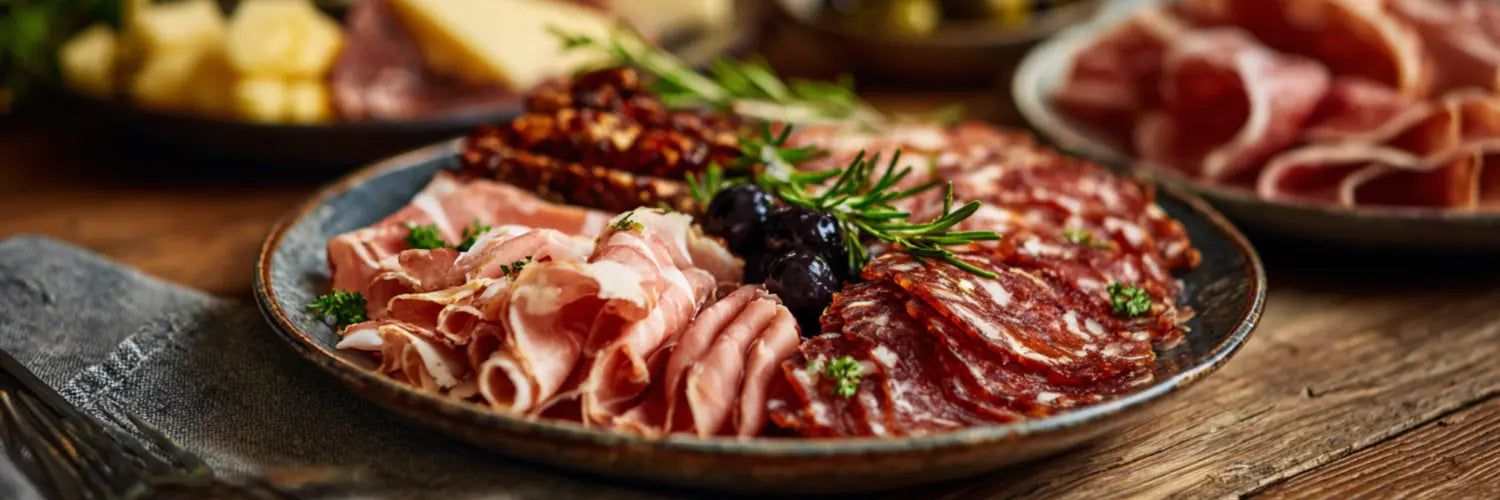



AI-generated illustration of potatoes dauphinoise with a golden potato top and a spooned opening showing soft layers in garlic cream

Side dish

Potatoes Dauphinoise

Published 31 October 2026 · Updated 31 October 2026

Thin layers of potato bake in garlic cream until soft enough to yield to a spoon, with a lightly golden top and a rich sauce between the slices. This cheese-free version starts with raw potatoes and cooks gently under a cover before the surface is left to colour.

Not kitchen tested by The Black Farmer.
Serves 4
Prep 30 min
Cook 85 min
Total 125 min

Timing: Untested baseline about 2 hours 5 minutes: maximum of 25 minutes active initial preparation and 20 minutes concurrent oven preheat, then 5 minutes assembly, 50 minutes covered baking, 35 minutes uncovered baking and 10 minutes resting/portioning. Therefore displayed prep is 30, cooking 85 and rest 10, total 125. Preheat is explicitly preparation, not a separate additional cooking stage; it starts with preparation and the initial parallel group's elapsed contribution is 25, not 45. All washing, peeling, weighing, slicing, garlic grating, buttering, measuring, coating, arranging, liquid checks, optional milk additions, covering, loading, uncovering, tenderness checks and portioning are allocated. No hob stage, marinade, unquantified cooling or hidden browning blast. Begin with softened butter; butter-softening time and separately cooked accompaniments are not included. Conditional stages are zero only in the baseline: add actual extra prep/wait, ten-minute covered/tenderness intervals and five-minute reduction intervals, never double-counting checks or reduction within another interval. Ovens, potato variety, actual layer depth and dairy temperature vary; complete tenderness and coating sauce take priority over the clock. No tested upper bound is claimed.

Ingredients

  • Big Potatoes - 500g

    Potatoes

    800g peeled weight

    Weigh 800g after peeling and removing damaged parts, then cut into even 2–3mm slices. Do not rinse or soak slices. Two 500g packs supply 1kg before peeling; prepared yield varies, so weigh and top up from your pantry if necessary. Keep any unused potato for another meal. The shop does not specify a named variety.

    £1.80

Adds 2 items across 1 products — £3.60 total.

Pantry ingredients such as oil, salt and herbs are not included.

Other Ingredients You'll Need

  • Double cream — 250ml (All mixed into the sauce; no separate topping or drizzle.)
  • Whole milk — 150ml, plus up to 50ml only if needed (Measure separately: 150ml for the initial sauce and up to 50ml conditional reserve, used in 25ml additions only when the liquid level is too low. The full 200ml is a maximum requirement, not the automatic initial addition; unused reserve is not part of the dish.)
  • Unsalted butter — 10g, softened (All for coating the base and sides of the dish. Use softened butter; no melting stage or butter topping.)
  • Garlic — 6g peeled weight (Finely grate, then mix all of it into the dairy; none discarded or rubbed separately on the dish.)
  • Fine salt — 4g (All mixed into the dairy, with no additional layer-by-layer or finishing salt.)
  • Ground black pepper — 1/4 tsp (All mixed into the dairy; no unmeasured finishing garnish.)

Method

Heat the oven and prepare the ingredients

Set the oven to 170C conventional/150C fan/gas 3 with a shelf in the middle. Allow about 20 minutes for preheating while you carry out this 25-minute preparation stage; use the oven's ready indicator and allow longer if it is not ready. Coat the base and sides of the specified gratin dish with all 10g softened unsalted butter. Wash the potatoes, peel and remove any damaged parts, then weigh 800g prepared potato. Cut into even 2–3mm slices with a sharp knife, or a guarded mandoline used as instructed. Do not wash or soak the cut slices: keep their surface starch for the sauce. Finely grate the 6g peeled garlic. Measure 250ml double cream, 150ml whole milk and a separate reserve of up to 50ml milk, plus the fine salt and ground black pepper. Preparation includes equipment, peeling, weighing, slicing and measuring; it does not include waiting for butter to soften.

Coat and pack the raw slices

Allow 5 minutes for mixing, arranging, checking the liquid and covering. Mix all the double cream, the initial 150ml whole milk, grated garlic, 4g fine salt and ground black pepper in a large bowl. Add the raw potato slices and turn gently, separating any stuck together so they are coated. Arrange in overlapping, mostly flat layers in the buttered dish; do not leave upright stacks or a thick central mound. Scrape every bit of the bowl's sauce over them and press down gently with the back of a spoon. Aim for roughly 3–4cm of evenly packed potato, with the liquid visible just below the uppermost slices rather than drowning the surface. If the liquid sits well below that level, add reserved milk 25ml at a time, up to 50ml in total, only as needed. Do not automatically pour in the reserve. Leave at least 1cm of clear headroom. Cover closely with foil and place on the baking tray. The potato has not been boiled or cooked on the hob.

Bake covered to soften the layers

Once the oven is ready, bake on the middle shelf at 170C conventional/150C fan/gas 3 for about 50 minutes, including loading and the check at the end. Lift the foil away from you to avoid steam. The liquid should be gently bubbling at the edges, and a small knife inserted through the centre should meet less resistance than in a raw slice, although the potatoes may not yet be fully tender. If the centre is still distinctly hard, replace the foil and continue in 10-minute intervals until it begins to soften before moving to the uncovered stage. Extra intervals extend the schedule. Do not taste partly cooked slices as a tenderness test.

Uncover and finish gently

Remove the foil and bake at the same temperature for about 35 minutes, including uncovering and checking. Look for a lightly golden top, gentle bubbling around the edge and sauce clinging between the layers. Insert a small knife vertically through the centre and in another thick part: it should slide through every layer without a firm or gritty stop. A coloured surface alone does not prove the potatoes are done. If there is resistance, continue in 10-minute oven-and-check intervals; loosely re-cover if the top is already well coloured. If the slices are fully tender but there is still a thin pool of milk rather than a coating sauce, continue uncovered in 5-minute intervals, watching the top. Count only actual additional elapsed time when checks overlap. Do not turn up the heat or use a grill to force colour: a pale-golden top is enough, and hard boiling can make the dairy look oily or grainy. Extra cooking or reduction extends the estimate.

Rest and serve as a side

Remove the dish to a heatproof trivet and leave uncovered for 10 minutes, with spooning into four equal side portions at the end included in this allowance. The sauce should settle around the soft layers rather than set into a firm slice; a small amount of creamy sauce in the dish is expected. Serve hot alongside your chosen main and vegetables. Do not add cheese, a cream drizzle or an unlisted garnish.

Serving Suggestion

Serve as the potato side with roast chicken and steamed green beans, or alongside Slow-Braised British Beef Short Ribs and a sharp watercress salad. Accompaniments are separate recipes, not included in these quantities or timings.

Frequently Asked Questions

Do the potatoes need boiling first?

No. This method layers raw 2–3mm potato slices in the dairy and gives them a long oven cook. Pre-boiled potatoes need a different cooking assessment; do not substitute them while retaining these timings.

Why should I avoid rinsing the slices?

Wash the whole potatoes before peeling, but leave the cut slices unrinsed and unsoaked. Their surface starch helps thicken the cream and milk as the layers cook; this recipe has no flour-based sauce.

Which potatoes and how much should I buy?

Use whole potatoes that can be peeled and cut into even 2–3mm slices. The shop pack does not specify a named variety; the method relies on checking all the layers for tenderness. Weigh 800g after peeling and trimming. Two 500g packs provide 1kg before peeling, not a guaranteed prepared yield: top up from your pantry if needed and save any surplus for another meal.

Does dauphinoise need cheese?

This version has none. Its lightly golden surface comes from baking the exposed potato and dairy, not a cheese topping. Adding cheese would change both the flavour and the finishing assessment.

Why are my potatoes firm under a browned top?

Slices may be too thick, the layer too deep or the oven cooking unevenly. Test right through the centre with a small knife and follow the extra cooking intervals in the method, covering loosely once the top is coloured. Browning alone is not a doneness test.

How much liquid should be visible?

After packing the slices, the sauce should reach just below the top layer, not cover it deeply. Start with all 250ml cream and 150ml milk; use the separate milk reserve only in the measured additions if needed. Keep to the specified dish dimensions. Once tender, reduce a thin pool briefly as directed, then allow the stated rest; the result is spoonable, not a firm terrine.